

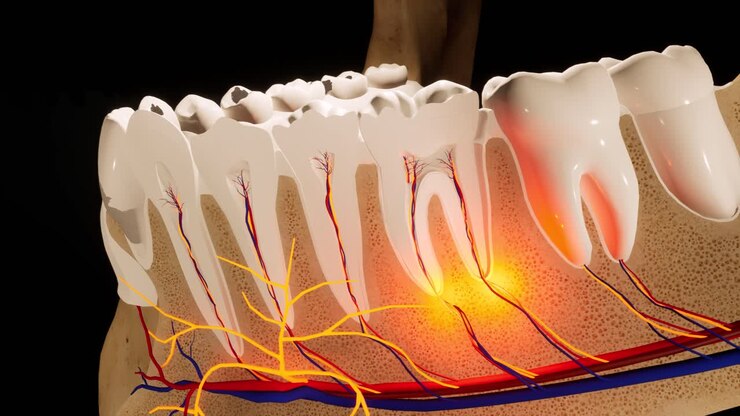
Endodontics & Advanced Root Canal Treatment
Marylebone, Central London
Welcome to Sonria Dental Clinic, located at 25 Devonshire Place, Marylebone, Central London (W1G 6JD). Our practice provides dedicated endodontic care focused on diagnosing, treating, and saving compromised natural teeth through advanced root canal therapy and microsurgery.
Specialist Endodontist: Dr Eduardo Miguel Aranibar Quiroz
DDS, Registered Specialist in Endodontics (GDC No. 79953)
Dr Eduardo Miguel Aranibar Quiroz is a registered Specialist in Endodontics with over 25 years of clinical experience dedicated to advanced root canal therapy and microsurgery. An active member of the British and European Endodontic Societies, he specialises in saving compromised natural teeth through precise, pain-free treatments for complex infections, curved canals, and secondary retreatments.
Why an Endodontist is Better than a General Dentist for Root Canal Care
While many general dentists perform standard root fillings, an endodontist offers a distinctly higher level of expertise, technical precision, and long-term success:
- Advanced Specialist Training: Endodontists undergo an additional 2 to 3 years of post-graduate specialist university and hospital training exclusively focused on pulp biology, micro-anatomy, and root canal techniques.
- High-Powered Operating Microscopes: Specialist endodontists routinely work under high-magnification surgical microscopes with fibre-optic illumination, revealing hidden accessory canals, fine micro-fractures, and calcifications that are completely invisible to the naked eye.
- Unmatched Experience & Volume: General dentists divide their time among check-ups, fillings, crowns, and extractions, typically doing only a couple of root canals a week. A specialist endodontist performs dozens every week, ensuring speed, comfort, and exceptional precision.
- Mastery in Complex & Failed Cases: From severely curved or calcified roots to removing fractured instruments and retreating previously failed root fillings, specialists have the instruments and skills to salvage teeth that would otherwise be condemned to extraction.
- Superior Pain Management: Endodontists are experts in targeting difficult-to-numb inflamed nerves, guaranteeing a completely comfortable, pain-free procedure even during acute dental infections.
What Does an Endodontist Do?
While general dental practitioners carry out routine dental maintenance, an endodontist focuses solely on resolving pain and stopping infection deep inside the tooth structure.
- High-Magnification Diagnostics: Utilising surgical operating microscopes to identify micro-cracks, calcifications, and hidden accessory canals invisible to standard visual inspection.
- Complex Root Canal Therapy: Thoroughly cleaning, disinfecting, and shaping narrow or severely curved canals using flexible nickel-titanium instrumentation.
- Endodontic Retreatment: Removing previous root fillings, posts, or separated instruments to resolve persistent or recurrent infections.
- Endodontic Microsurgery (Apicoectomy): Treating persistent infections at the tip of the root when conventional non-surgical treatment is not feasible.
- Dental Trauma Care: Preserving and stabilising teeth that have suffered fractures, displacements, or nerve damage from facial impact.
How We Treat & Save Your Tooth: Step-by-Step
Decontamination
An access cavity is created and diseased, painful pulp tissue is gently removed from within the tooth.
Disinfection
The micro-canals are shaped, thoroughly disinfected, and irrigated to eliminate all residual bacteria.
Obturation
The cleaned space is hermetically sealed with biocompatible gutta-percha to prevent future re-infection.
Reinforcing Crown
A durable permanent crown is placed to protect the tooth against fractures and restore full bite function.
Frequently Asked Questions (FAQs)
An endodontist dedicates 100% of their practice exclusively to root canal therapy and apical surgery. With years of additional specialist university training, specialized surgical operating microscopes, and advanced nickel-titanium instrumentation, they achieve significantly higher long-term success rates, especially for intricate anatomy, multi-canal molars, and persistent infections that general dentists may struggle to resolve.
No. With modern local anaesthetics and micro-endodontic techniques, the procedure is as comfortable as having a standard filling. The treatment is designed to relieve the pain caused by nerve inflammation and infection, not cause it.
Your natural tooth is supported by the periodontal ligament, providing natural bite sensation and preserving the surrounding jawbone. Saving the natural tooth is biologically conservative and generally the most cost-effective long-term solution.
Most endodontic procedures are completed in one or two visits of approximately 60 to 90 minutes each, depending on the anatomy of the tooth and the severity of the infection.
Key warning signs include persistent, throbbing pain when biting or chewing; lingering sensitivity to hot or cold food and drinks; localised swelling, tenderness, or a pimple-like bump on the gum; or darkening/discoloration of a tooth following an injury.
