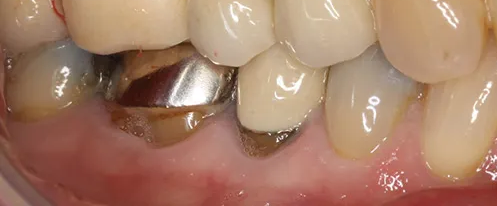
A dental crown can look completely intact on the surface while the natural tooth structure beneath it begins to fail. Early warning signs—a dark shadow emerging near the gumline, food catching repeatedly at the edge, a sudden shift in your bite, or unexpected sensitivity to hot and cold—should never be ignored. For patients seeking dental crown replacement in Marylebone and Central London, the priority extends beyond pure cosmetics: it is about diagnosing hidden decay early, safeguarding the underlying root, and restoring long-term strength, comfort, and confidence.
While premium, modern restorations offer outstanding longevity, crowns are not designed to endure indefinitely. Decades of heavy chewing forces, microscopic wear, gum recession, decay at the margin, and previous endodontic work all impact performance. At Sonria Dental Clinic, our central Marylebone practice provides meticulous, diagnostic-led restorative assessments so underlying issues are resolved before they escalate into acute pain, infection, or tooth loss.
Crown failure occasionally happens abruptly from an accidental bite or trauma, but more commonly, warning signs develop gradually over months. Common indicators that your restoration requires clinical review include:
A subtle cosmetic chip does not automatically warrant complete renewal. The fundamental deciding factor is whether the restoration maintains an airtight, biocompatible marginal seal that shields the tooth beneath from oral bacteria and masticatory force.
At our Central London clinic, replacing a crown is never treated as a simple cosmetic replacement. The existing restoration must be systematically removed with precision magnification, allowing our clinicians to evaluate the remaining tooth structure for recurrent caries, micro-fractures, periodontal stability, and previous root canal health.
For patients visiting us from across Marylebone, Fitzrovia, Mayfair, and the West End, this planning-led approach is crucial for teeth that have undergone extensive prior treatment:
Restoring a compromised tooth requires a methodical, two-stage clinical workflow designed to maximise comfort and longevity:
Your visit begins with a thorough examination. We evaluate your bite dynamics, examine the margins under magnification, and take targeted digital X-rays or intraoral scans. This consultation is also your dedicated time to discuss any concerns, whether you have a demanding Central London schedule, struggle with dental anxiety, or wish to enhance tooth colour and alignment.
Under precise local anaesthesia, the failing restoration is safely sectioned and removed with minimal impact on sound enamel. All decay is eradicated, the internal tooth architecture is reinforced, and highly accurate digital scans or impressions are captured for our master dental laboratory.
A hand-finished, tooth-coloured temporary crown is placed to protect the prepared tooth from temperature sensitivity, support balanced chewing function, and maintain your gum contours while your custom restoration is crafted.
Once your final crown arrives from the laboratory, we verify fit, optical translucency, and occlusal balance. Even microscopic contact discrepancies can lead to jaw strain or bite imbalance. Once you and your dentist are completely satisfied with the fit and appearance, the new crown is bonded using advanced resin cements.
Modern cosmetic and restorative dentistry has moved past unsightly metal-backed restorations. Today’s all-ceramic options deliver biocompatibility, strength, and lifelike aesthetics:
Cosmetic Planning Tip: If you are planning professional teeth whitening, complete the treatment before your final crown shade is selected. Restorative ceramics do not respond to whitening gels, so your new crown should be precisely matched to your refreshed smile.
Depending on the clinical diagnosis, minor porcelain chips can occasionally be smoothed or repaired chairside using composite bonding. If a clean crown comes loose with an intact margin and healthy underlying tooth, prompt recementation may be possible.
However, recementing is not an option if marginal decay is present or the cement seal has disintegrated. Re-cementing a compromised restoration traps active bacteria against dentine, drastically accelerating the risk of nerve damage and extraction. The right choice balances tooth longevity, functional bite dynamics, and personal aesthetic goals.
While ceramic restorations cannot decay, the natural tooth margin along the gumline remains susceptible to plaque accumulation and bacterial ingress. Protecting your investment requires simple, consistent habits:
Sonria Dental Clinic provides dental crown replacement from our modern practice in Central London, conveniently accessible for patients throughout Marylebone, Baker Street, Fitzrovia, Regent’s Park, and Mayfair.
No. The entire procedure is performed under local anaesthetic. The tooth, surrounding gums, and adjacent area are completely numbed before treatment begins. Patients may feel slight vibration as the old crown is sectioned, but no discomfort. Post-treatment tenderness at the gum margin is typically mild and settles within a couple of days with over-the-counter pain relief.
Crown replacement is typically completed across two appointments spaced 1 to 2 weeks apart. The initial preparation, decay clearance, and digital scanning take approximately 60 to 90 minutes. The final try-in and bonding visit takes around 30 to 45 minutes.
Yes. The crown itself is impervious to cavities, but the natural tooth exposed at the margin along the gumline can decay if plaque accumulates or if the internal cement bond breaks down over time.
The cost varies based on the tooth’s clinical complexity, whether preparatory root canal or core rebuilding treatments are necessary, and the choice of restoration (such as monolithic zirconia or hand-layered E-Max porcelain). In private Central London practices, high-grade ceramic crowns generally range between £750 and £1,400 per tooth. You will always receive a transparent, itemised treatment plan following your diagnostic consultation.
Keep the crown safe in a clean container, avoid chewing on that side of your mouth, and contact our Central London dental practice for an urgent appointment. Do not attempt to reattach the crown with household adhesives, which can damage the underlying tooth tissue and prevent accurate clinical re-bonding.
Sonria Dental Clinic, 25 Devonshire Place
London W1G 6JD
020 7224 1402 - General Enquiries
07507689112 - Emergencies
Email: info@sonriadentalclinic.com
| Monday to Friday | 8.00 am – 6.00 pm |
| Saturday | 9.00 am – 2.00 pm |
| Sunday | Closed |
For Dental Professionals Only