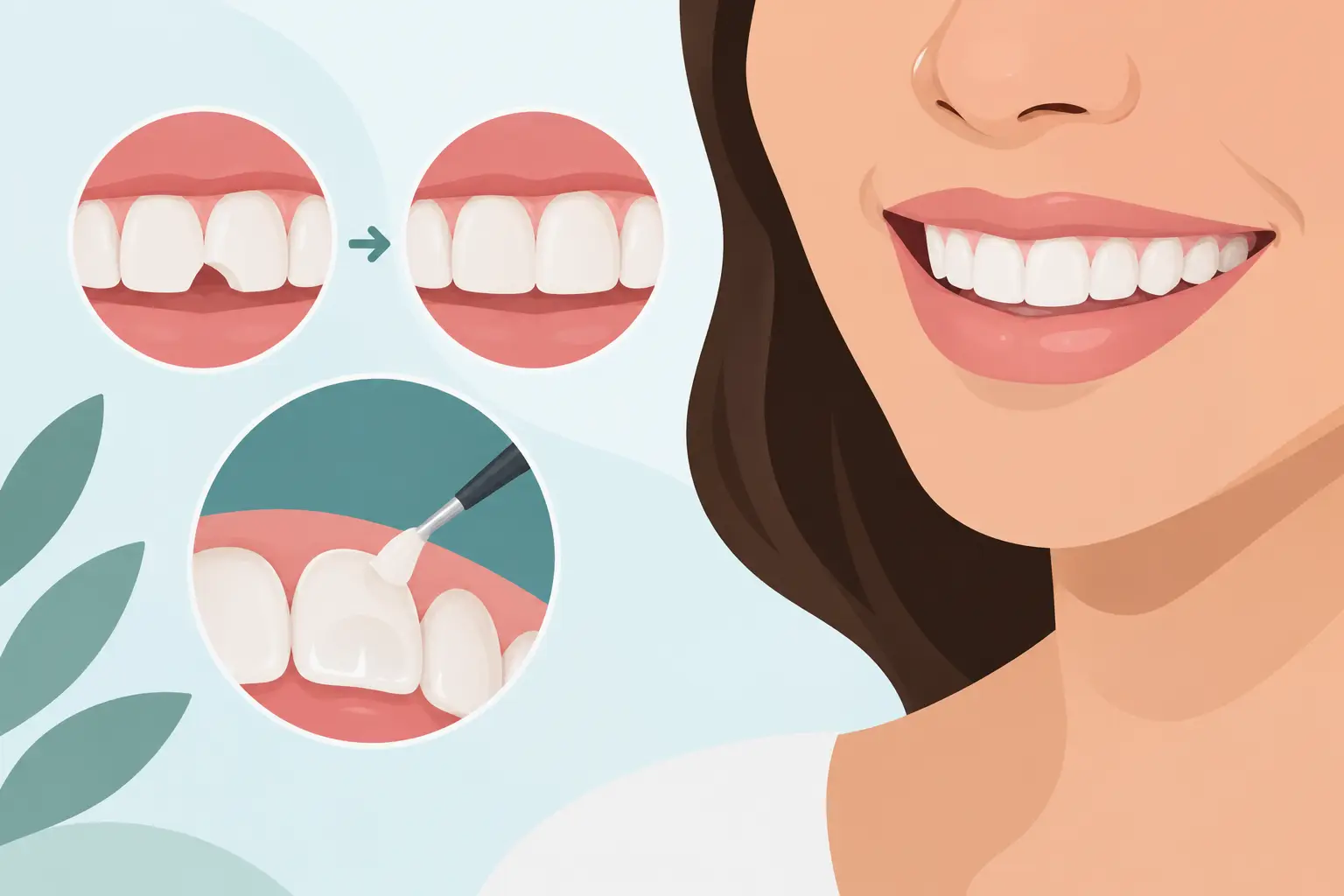
A small chip can make a surprisingly large difference to how you feel about your smile. It may catch the light in photographs, feel sharp against your tongue, or make you reluctant to smile freely in meetings. Composite bonding for chipped teeth can often restore the missing edge in a single, carefully planned appointment, preserving as much healthy tooth structure as possible.
The right treatment is not simply about making a tooth look whole again. It is about matching its shape, translucency and surface texture so the repair belongs naturally within your smile, while also checking why the chip happened in the first place. At Sonria Dental Clinic, this balance of detail, comfort and long-term oral health guides every cosmetic restoration.
What is composite bonding?
Composite bonding uses a high-quality, tooth-coloured resin to rebuild a chipped, worn or uneven area of enamel. The material is applied in fine layers, shaped directly on the tooth and then hardened with a curing light. Your dentist refines and polishes the finished surface so it reflects light in a similar way to natural enamel.
For a straightforward chip, the tooth usually needs little or no drilling. This makes bonding a conservative option compared with treatments that require more preparation of the tooth. It can be particularly appealing when a front tooth has a small missing corner, a slightly shortened edge or a minor fracture that has affected the tooth’s appearance.
The artistry matters as much as the material. Front teeth are not one flat shade of white: they have subtle changes in colour, translucency and contour. A considered shade assessment and precise finishing help prevent a bonded area from looking opaque, bulky or obvious.
When composite bonding for chipped teeth is suitable
Composite bonding is often an excellent choice when the damage is confined to the outer enamel and there is sufficient healthy tooth remaining. It can restore the outline of a tooth after a minor accident, repair a chipped incisor, soften an uneven edge or address localised wear. It may also be combined with whitening where appropriate, although whitening is usually completed first so the composite shade can be matched to the final tooth colour.
Suitability depends on more than the size of the chip. Your bite is central to the decision. If the repaired tooth meets heavily against an opposing tooth, or if you clench or grind at night, the composite may be more likely to chip or wear. In these circumstances, a protective night guard may be recommended after treatment. If a chip has sharp edges, sensitivity, pain, or follows a significant knock, a prompt assessment is particularly worthwhile. Damage can extend further than it first appears.
A careful examination may include photographs, bite assessment and digital scans where useful. This allows the clinician to assess the enamel, neighbouring teeth, gum health and the forces placed on the restoration when you bite, speak and chew. For patients who feel nervous after a dental accident, a calm consultation can turn an uncertain situation into a clear, manageable plan.
When another treatment may be better
Bonding is not automatically the best answer for every chipped tooth. A larger fracture, weakened tooth, old filling, deep crack or history of repeated breakage may call for a different approach. Porcelain veneers can offer greater stain resistance and durability for some aesthetic cases, while a ceramic crown may be more suitable where substantial tooth structure has been lost.
If the nerve is affected, precision endodontic treatment may be needed before any cosmetic restoration. Where the underlying issue is tooth grinding, erosion or an unstable bite, treating only the visible chip without addressing the cause risks a short-lived result. The most appropriate option is the one that protects the tooth as well as improving its appearance.
What happens during the appointment?
Many small repairs can be completed in one visit. The process is generally comfortable, and local anaesthetic is not always necessary unless the tooth is sensitive or additional preparation is required.
Your dentist begins by selecting and blending composite shades under appropriate lighting. The enamel is gently conditioned so the resin can bond securely. Composite is then placed in small increments, with each layer sculpted to recreate the tooth’s natural form. This is especially important at the incisal edge, where even a fraction of a millimetre can influence symmetry and speech.
Once the composite is cured, the dentist adjusts the bite with great care. The restoration is polished to a smooth, enamel-like finish, and you will be asked to bite together and move your jaw naturally. This final stage helps ensure the repair is comfortable as well as discreet. A review may be advised if the case is more complex or several teeth are being enhanced.
How long does composite bonding last?
With conscientious care, composite bonding can look attractive for several years. Its lifespan varies because every smile is used differently. The size and position of the repair, your diet, oral hygiene, bite forces and habits such as nail biting or chewing pens all play a part.
Composite is durable, but it is not identical to enamel or porcelain. Over time it can pick up surface staining from tea, coffee, red wine and tobacco, and it may gradually lose some of its original shine. Professional polishing can often refresh the surface. Small chips can frequently be repaired or added to without replacing the entire restoration, which is one of bonding’s practical advantages.
To protect the result, brush twice daily with a fluoride toothpaste, clean between your teeth and attend regular hygiene and dental appointments. Avoid using bonded teeth to open packaging or bite hard objects. If you wake with jaw tension, headaches or signs of grinding, do not ignore it: a bespoke night guard may protect both your natural teeth and cosmetic work.
The benefits and limitations to weigh up
The principal benefit of composite bonding is its conservative nature. It can restore a chipped tooth quickly, often in one appointment, with minimal alteration to natural enamel. It is also adaptable. Should your aesthetic goals change, or if a repair needs refinement, composite can usually be adjusted more readily than porcelain.
The trade-off is maintenance. Composite is more prone to staining and surface wear than porcelain, especially in patients who grind their teeth or enjoy strongly coloured drinks. It may need polishing, repair or replacement sooner than a ceramic restoration. The best choice depends on the individual tooth, your bite, your expectations and whether you are seeking a modest repair or a broader smile transformation.
A natural-looking result should never mean an overbuilt tooth. Thoughtful bonding respects the proportions of your face, lips and neighbouring teeth. Sometimes the most beautiful outcome is so subtle that no one notices treatment at all – only that your smile looks healthy, balanced and entirely your own.
Questions patients often ask
Will composite bonding damage my teeth?
When used appropriately, bonding is designed to be minimally invasive. For a simple chip repair, healthy enamel often needs no drilling. The surface is conditioned to allow the composite to adhere, but the aim is to preserve natural tooth tissue wherever possible.
Can bonded teeth be whitened?
Composite itself does not whiten with bleaching treatments. If you are considering whitening, it is usually best to whiten your natural teeth first and then have the bonding shade matched afterwards. Existing composite may need replacing if your teeth become noticeably lighter.
Does a chipped tooth always need treatment?
Not always, but it should be assessed. A very minor chip may only need smoothing, while a more substantial fracture can expose deeper layers of the tooth or affect the bite. Early advice helps prevent rough edges, further damage and uncertainty.
A chipped tooth deserves more than a quick cosmetic fix. With the right assessment and meticulous finishing, composite bonding can return comfort, strength and quiet confidence to your smile – without taking more from the tooth than necessary.